Blog / 06.08.2026
Padel Talk with Hakan Yakin
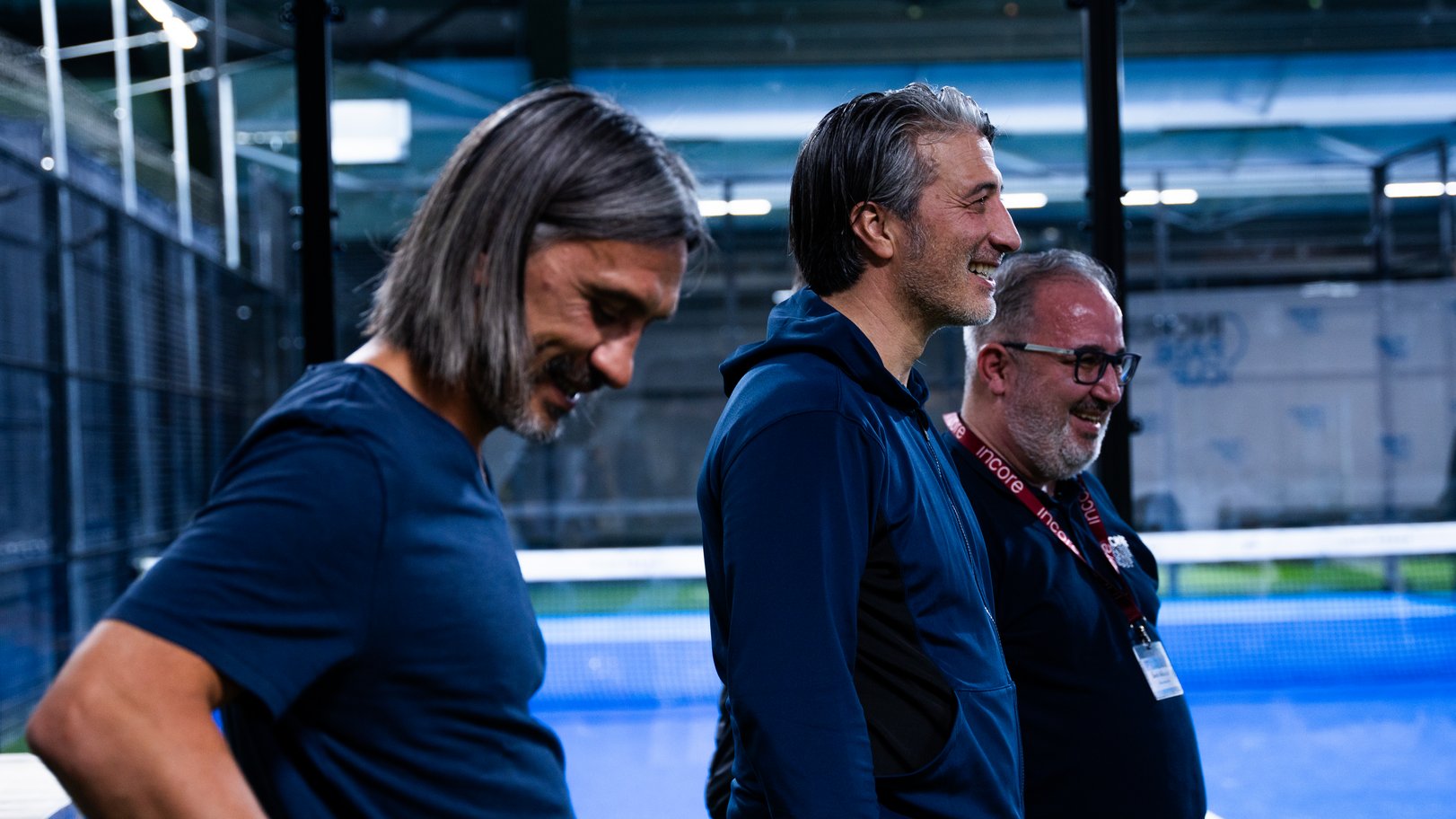
The padel boom has reached Switzerland – and Hakan Yakin is right at the heart of it. The former Swiss national team footballer and co-owner of Yakin Arena talks about the rapid development of this fast-growing sport, the shared vision he has with his brother Murat Yakin, head coach of the Swiss national football team, and the planned transformation of the facility into a dedicated padel destination.
What inspired you and your brother to establish Yakin Arena, and what was the original vision behind the facility?
Hakan: We wanted to create a meeting place, not simply rent out sports courts. Our goal was to build a modern social hub where professionals, recreational players, families and corporate groups could come together, enjoy sport and then spend time socializing in the restaurant. We also wanted to help drive the development of padel in Switzerland. That is why our aim was to create a first-class platform with top-quality infrastructure and share our own passion for padel with as many people as possible.
As a former professional footballer, what personally attracted you to padel, and what makes this sport so special compared with other sports?
Hakan: The team aspect plays a central role in padel. Played in teams of twoon a relatively compact court, the sport demands constant communication, strong mutual understanding and precise tactical coordination between partners– much like on a football pitch. Another reason is the immediate sense of achievement. Padel has a very gentle learning curve: you understand the game quickly, enjoy long rallies almost from the start and have a lot of fun, even if you are not a tennis professional.
«Very few sports work so well across generations. In the late afternoon, we might have juniors or corporate groups playing on one court, while seniors are playing right next to them. Padel brings together people from incredibly different backgrounds and age groups.»
Hakan Yakin, Co-owner Yakin Arena
How has demand for padel developed since Yakin Arena opened? Which developments have surprised you the most?
Hakan: What has impressed us most is the incredible diversity of players. Very few sports work so well across generations. In the late afternoon, we might have juniors or corporate groups playing on one court, while seniors are playing right next to them. Padel brings together people from incredibly different backgrounds and age groups. We have also been positively surprised by the tremendous growth in the corporate and events sector. More and more companies are discovering padel for team events, Christmas parties and client events. The combination of sport followed by socializing in our restaurant, «La Qualità», is proving extremely popular.
You are currently planning a comprehensive renovation of the facility. What prompted this transformation, and what are your main priorities?
Hakan: With the renovation, we are taking a consistent approach towards specialization. By converting other sports areas – such as the football pitch – into additional space for new, state-of-the-art padel courts, we can focus 100% on what we do best and where demand is strongest. At the same time, we are investing in top-level infrastructure. Padel is also evolving technologically, which is why the renovation will include state-of-the-art court installations, optimized acoustics, improved lighting and an even more professional environment for our players.
From your perspective, what needs to happen for padel to become one of Switzerland’s most popular recreational sports in the coming years?
Hakan: Expanding the infrastructure is an important step in the further development of padel in Switzerland. More indoor facilities that can be played year-round are needed across the country so that the community can continue to grow independently of the weather. Targeted youth development is equally important. We need to bring the sport into schools and tennis clubs so that children and young people can discover their passion for padel at an early age.
Padel is increasingly becoming a platform for networking and building relationships. From your perspective, what role do corporate partners such as Incore Bank play in creating these opportunities?
Hakan: Building relationships away from the office is a major benefit of partnerships like these. As the Incore Padel Cup has impressively demonstrated, sport creates opportunities for people to connect on an equal footing. On the court, traditional hierarchies take a back seat. In a dynamic and relaxed atmosphere, potential business partners, clients and industry peers can get to know one another in a personal and authentic way.
Companies and sport have much more in common than simply a competitive spirit – they share core values such as teamwork, dynamism, precision and the ambition to achieve outstanding results together. These shared principles form the foundation for sustainable success – both on the court and in the business world. When a renowned transaction and technology bank such as Incore Bank embraces padel as a platform, it adds further credibility and professionalism to the entire community.
What misconception about padel tends to persist until people try the sport themselves?
Hakan: Padel is an extremely intense workout. Even though the court is smaller than a tennis court, the ball remains in play thanks to the glass walls. There are hardly any breaks: you sprint, stop, jump and are constantly on the move. After 60 minutes, you are completely drenched in sweat. It also demands a far greater degree of strategic thinking than many people might expect. While power can often be a decisive factor in tennis, success in padel relies much more on tactical awareness, patience and intelligent shot selection.
In padel, however, pure power is not what determines success. Because the ball can rebound off the glass walls and remain in play, tactical awareness, patience, a good feel for angles and intelligent positioning are far more important
The coordination challenge is also often underestimated. Playing with the glass walls requires a different way of thinking at first: instead of hitting the ball immediately, you have to learn to let it pass, wait for it to rebound and then return it under control. This unique combination is what makes padel such an engaging and strategically fascinating sport.
> Learn more about the Incore Padel Cup
> Interview with Matthieu Amgwerd and Bruno Brüllmann, Managing Directors of Swiss Tennis Padel
> Behind the scenes of the Incore Padel Cup with Jana Ruggle
> Interview with Mark Dambacher: Why Incore Bank Is Bringing Finance Professionals To The Padel Court